
diet vs zero
someone decided women should manage themselves and men should maximise themselves — and then printed it on aluminium.

capitalism doesn’t just sell products. it sells identities. we think we’re choosing soda, but really, we’re choosing which gender script we’re allowed to live inside.
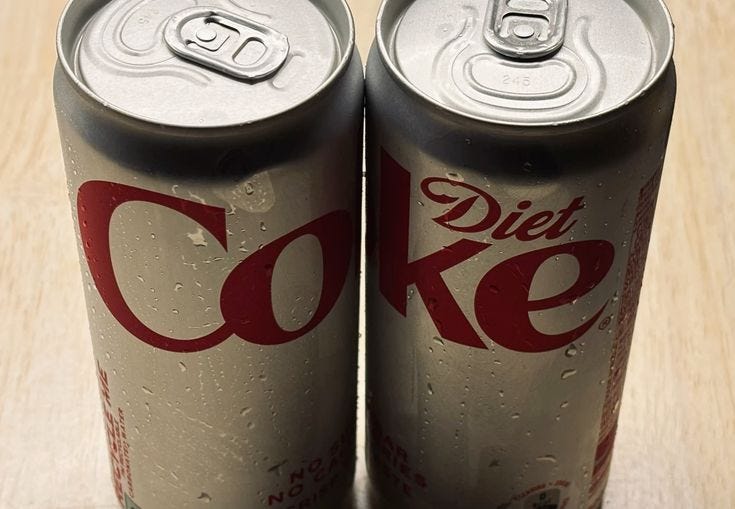
diet coke was launched in 1982 and, especially in its early decades, was heavily marketed toward women. its advertising focused on slimness, lifestyle, and even the objectification of men — most famously in the diet coke break commercials, where groups of women swooned over shirtless male construction workers. over time, marketers began coding “diet” drinks as feminine. as a result, many men started avoiding them — not because they cared less about sugar or calories, but because in mainstream gender norms, “diet” became a girl thing.
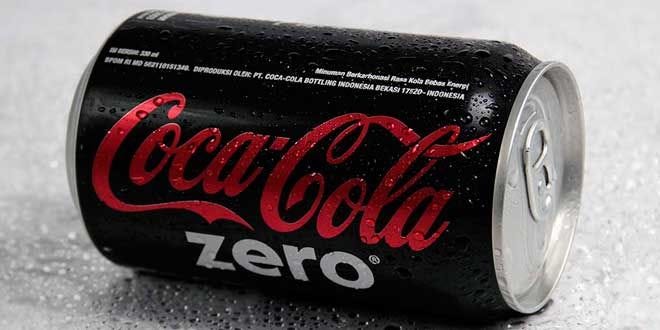
so in 2005, coca-cola launched coke zero. the cans were black. the ads leaned into stereotypically “manly” imagery. the word “diet” disappeared. the goal wasn’t to change the stigma — it was to design a product that allowed men to avoid it.
diet coke became coded as thinness, restraint, self-control, body management, and lifestyle — not performance. these are all traits society already associates with women. the drink itself became “feminine,” and men began avoiding it, not because they didn’t care about sugar, but because drinking “diet” was framed as a threat to masculinity. masculinity became so fragile it could be shaken by a silver can.
coca-cola did not question that system. they built another product around it. instead of fixing the stigma, they reinforced it. women were never offered a neutral, ego-safe version. men were.
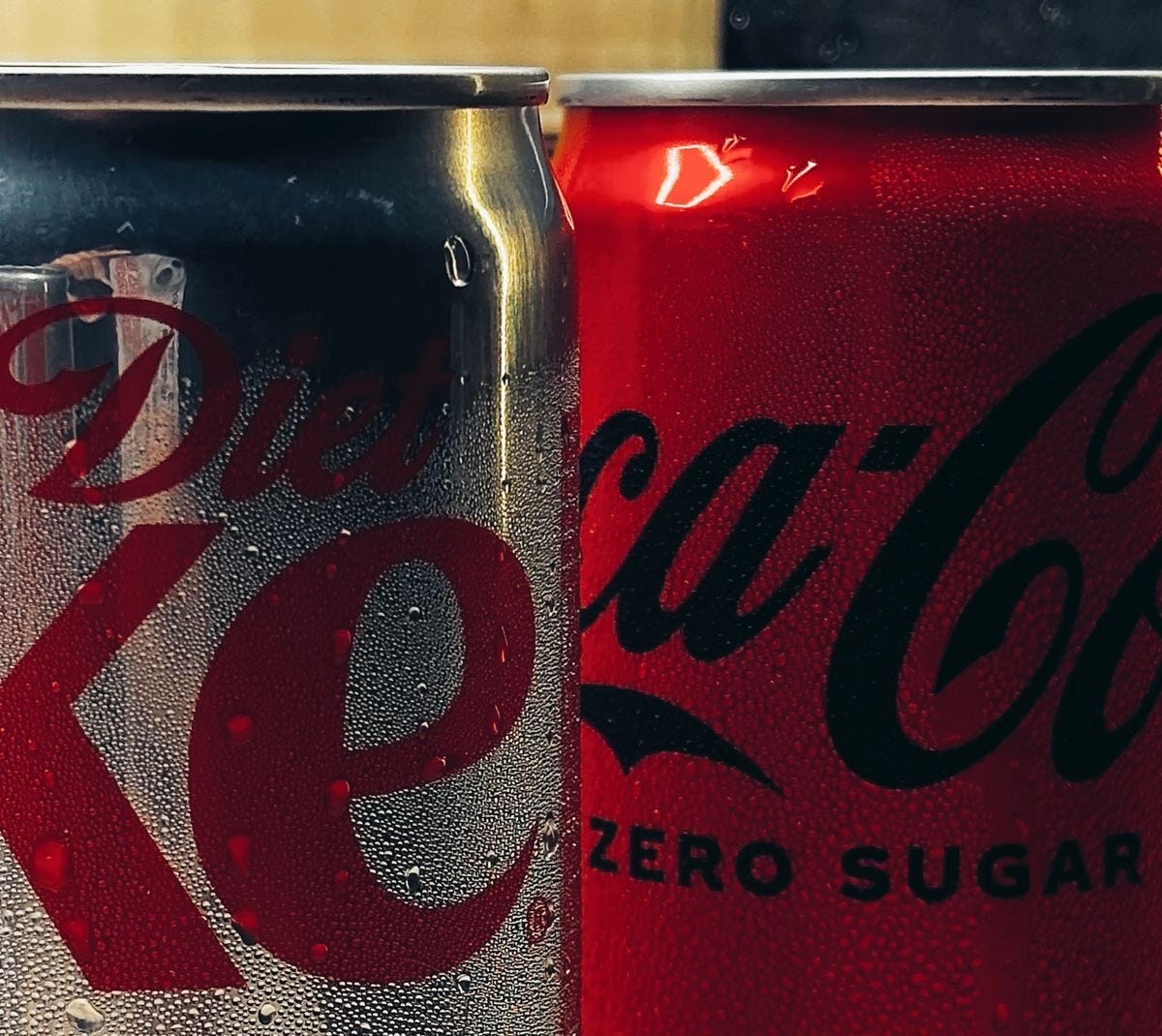
the word “diet” is moral language. it implies restriction, discipline, correction — that your body is a problem to manage. it frames consumption through guilt. it whispers: be good. be smaller. behave.
“zero,” on the other hand, is power language. it implies domination, control, performance — excess without consequence. “zero sugar” is not about fixing your body. it is about being unstoppable while still being indulgent.
the result is the same chemical drink sold through two completely different emotional realities. women are sold control yourself. men are sold you can have everything.
this reveals something darker about how society views bodies.
women’s bodies are treated as projects — as problems — as things to maintain, reduce, and discipline. men’s bodies are treated as tools, engines, and weapons — as things to enhance, fuel, and maximize. so even when selling sugar-free soda, the messaging remains the same: women are told their bodies are wrong and must be fixed; men are told their bodies are powerful and should be optimized.
this was never about health. it was about whose body gets respected and whose gets monitored.
this is why it is cultural gaslighting.
they sell it as “choice.” but you did not choose freely. your preferences were engineered. the stigma was created. the insecurity was planted. the social coding was designed. the emotional language was written. then two doors were placed in front of you, and you were told to pick what feels like you.
that is not empowerment. that is designing the maze and calling it freedom.
i reach for diet coke — and i am still questioning who taught me to.
what did they teach you to prefer?
if you stayed with me this long, subscribe and share 🫶
Reading this felt like being gently invited to notice myself without judgment. Not blame, awareness. That last line stayed with me. Thank you for writing with such clarity and compassion.
My rebellion against this misogyny is to not drink either artificial chemical filled potion.